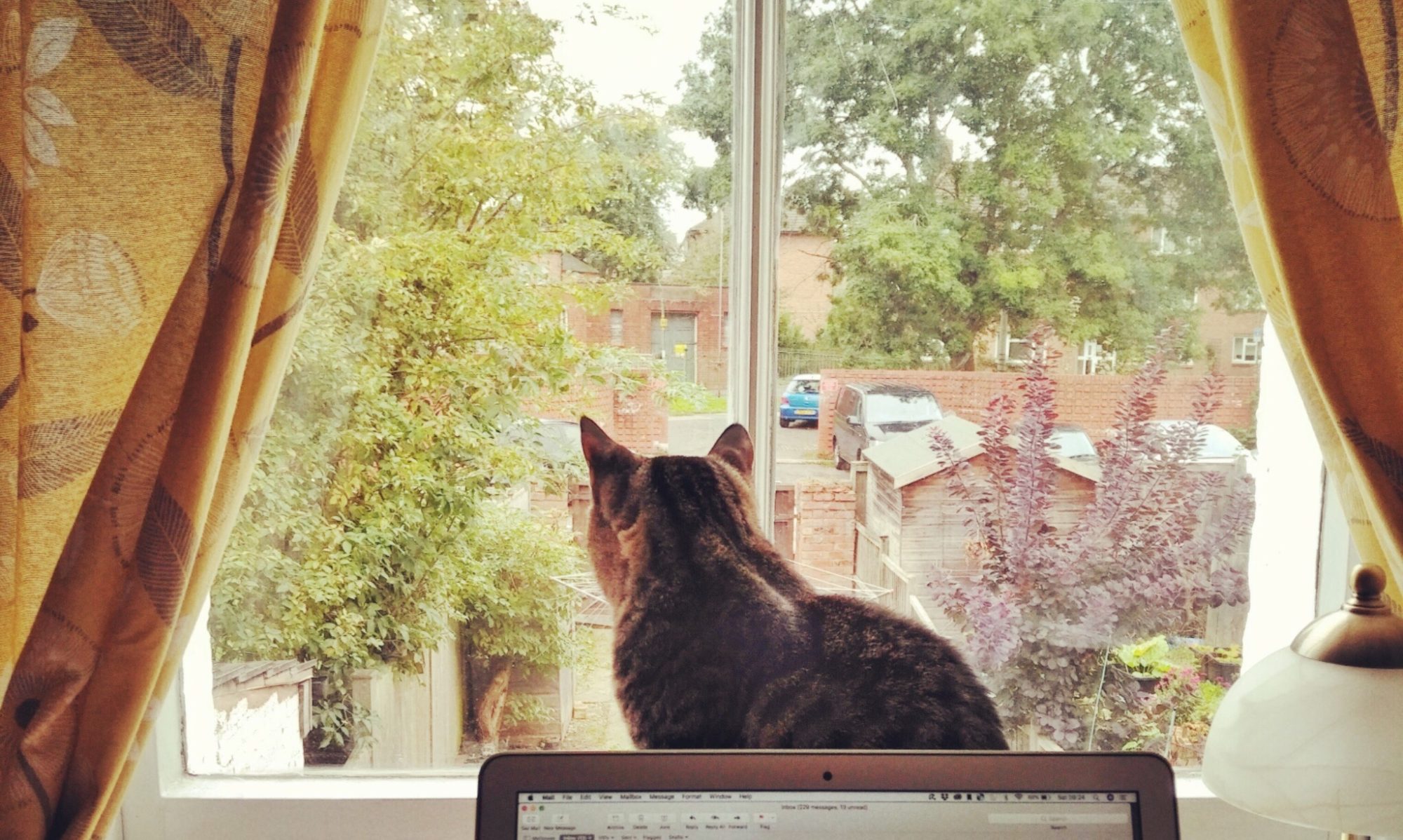

shooting ghosts…

it’s half past four and i come outside to sit in the shadows and ponder and for a short period of time – too short really – there’s an uncanny silence. you know the thing, when just briefly the world seems to stop. to cease. to rest and relax and quit fretting. it’s an illusion of course and in truth the world continues to busy itself as it must – somewhere it’s daylight, somewhere else it’s noon, far from here it’s the end of a day and not its beginning and people wearied from their own noise are going to bed.

but i sit in that short dark silence and pretend it’s real because pretending is after all my forte and it’s nice to think that the world might have stopped for a moment, for me, and to waste this seems wrong when so many are trying to escape their noise. then i hear a car, in the distance, on the ring road – not one car really, it’s many, but the swish of wheels on the tarmac is continuous and so it does sound like one long car taking forever to pass, or one short car going evenly around in circles. perhaps it’s lost.

and the silence is broken. it doesn’t come back. i’m glad i grabbed it whilst it was there but equally happy it’s gone because i think if it stayed too long it would become frightening. noise is what we know. total silence, for all its therapeutic qualities, isn’t a natural state – there’s always something, a heartbeat at least.

a heartbeat.

i was disappointed yesterday with the venom i saw in this online world. not disappointed in the individuals per se – they have faith in their grievances – but disappointed with the mass. the pushing aside of love and forgiveness in favour of bile and more noise. what are we doing to ourselves? i thought.

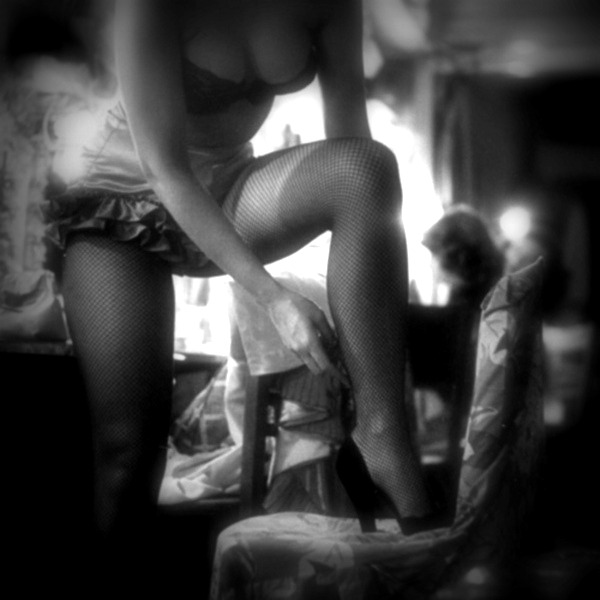
i tried, before i switched on this computer and flooded my eyes with light, to capture the black and greys of my terrace before dawn. the shapes of wall tops and roofs and plant pots and my lovely big tree – the moon, a tiny crescent peeking through its dark leaves – but the ghosts thwarted me and would not play. the battery failed, the camera switched off. the noise of wheels on tarmac started up, my mind shifted to other thoughts and the moment was lost.

now i see no shadows or shapes. the bright glow from my screen surrounds me like a modern ghost with modern sensibilities and no thought for subtlety, for peace. it’s hard to see anything when one dominant light pervades and harnesses the eye’s focus – rudely, i think – and so i shall switch this off again and catch the last of those black and grey shadows before the night fades, the noise grows and another day begins.
Amour sacré de la France…

France. What’s not to love?  Here are just some of my favourite things from this summer’s trip to Paris, Poitiers & La Rochelle…

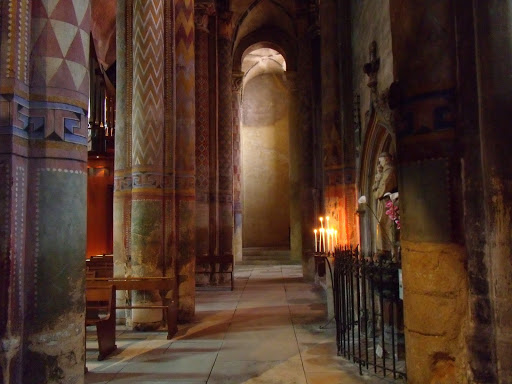
Église Notre-Dame La Grand de Poitiers

Churches – so many, so beautiful. The kids were saintly too as we dragged them from one to another – from (my favourite) the small but perfect Église Notre-Dame La Grand de Poitiers to the grand Cathédrale Saint-Étienne de Meaux… and more.

I absolutely love the faded painting on the stonework in Église Notre-Dame. This church lured us in several times – one evening it was the sound of someone playing medieval-sounding music on a flute by candlelight which was beautiful. Another it was French/Latin mass.


Food & Wine –  what can I say? Were I to live in France I’m sure I’d expand rapidly. The bread, the fresh croissants, the cheese, the snails, the mussels… the garlic! Those gorgeous cakes in the patisserie…

The French are wonderful at aesthetics.

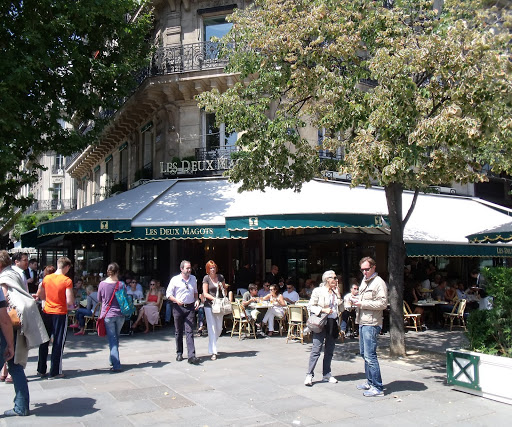
Boulevard Saint-Germain – I’ve long wanted to walk along here and find one of the cafés frequented in the past by philosophers and poets. Relax in the sunshine and soak in a little of those past absinthe-fueled conversations whilst watching Paris go by…

We’d just eaten lunch by the time we came across Les Deux Magots, so I only took a photograph. Maybe next time I’ll sit and have that absinthe.

Palais de Justice and tour Maubergeon

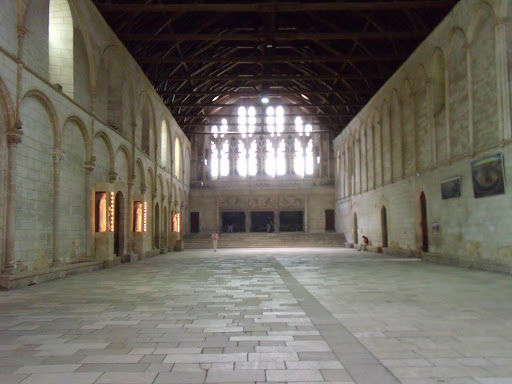
Poitiers – visiting the Palais de Justice de Poitiers, along with its tour Maubergeon was the single most anticipated part of the trip for me. This was Aliénor d’Aquitaine’s much loved home, as well as being the location of the Court of Love where she and daughter, Marie, ran a medieval version of the Jeremy Kyle show… though I’m sure way more tasteful given they were French and the era far more noble etc. etc.

Salle des Pas Perdus

Walking through the Salle des Pas Perdus in Poitiers palace and knowing Aliénor of Aquitaine walked there too was wonderful – even with the alterations over the last few hundred years. The palace today is still used as a law court – you get frisked on the way in – and so much of it is inaccessible. Including, sadly, the Court of Love itself.

tour Maubergeon

The tour Maubergeon was added on by William IX for his glorious mistress, (and Aliénor’s maternal grandmother), Dangereuse de l’Isle Bouchard. It too forms part of the law court building and so the interior has been modernised with artificial walls.

The upstairs, where Dangereuse sewed whilst her troubadour seduced her with song, is now a court room for affaires matrimoniales. Did I also say how much I like French humour?

All of this is of great fascination to me… I could ramble on, but I shan’t.

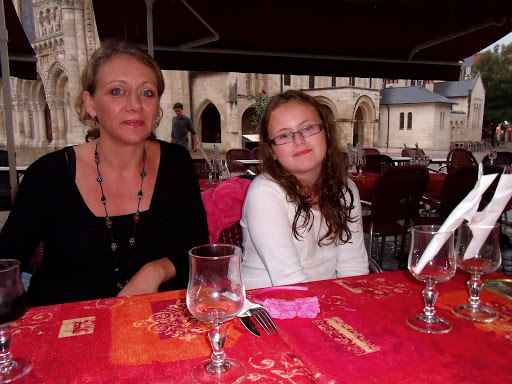
We stayed in this square – just right of Hôtel de Ville in the picture. That fine building is now the city hall and must have been very grand when it was a hotel. A brilliant and beautiful location, this old part of Poitiers – Aliénor’s palace just a couple of streets away and restaurants/bars galore.

Eating Out – did I mention the food? Yes, okay, but worth mentioning again. Not having to cook and sitting outdoors in balmy ambiance is bliss.


La Rochelle – the harbour at night was glorious and a lot of fun. We stayed up pretty late. Street entertainers everywhere, outdoor restaurants busy and buzzing all along the harbour, and it was warm.

Nice for the kids to finally get some time on the beach too.

Finally, French waiters – I’d hoped to encounter one of the stereotypical rude French waiters we hear so much about. Alas, this was not to be. Not even in Paris. They were all polite, efficient and handsome.

It would have been rude to take pictures though, so you’ll just have to make do with Guetta as an illustration… (oh woe, eh?)

Something there is that doesn’t love a wall


Before I built a wall I’d ask to know
What I was walling in or walling out,
And to whom I was like to give offence.
           
                     ~ Mending Wall, Robert Frost


Out walking today I came across this villa, of the sort I like – tall windows, interesting roof pitch, slightly jaded. A place filled with stories.

The original entrance gate, for those on foot at least, has been walled up. I thought this a shame. The road is busy, not many approach houses on foot any more. The door has had its day. But still I think it sad…

It stands proudly behind that wall though. Despite the slur. Despite its time having gone and being unlikely to ever return.

It is, I think, a particularly noble door.

A momentary lapse of reason

There aren’t many things that scare me… well, beyond the obvious stuff – scary thugs in dark alleys with sharp knives, my kids falling into open manholes on the street (yes, I know it’s unlikely, but it’s a recurring day-mare I have).

But wasps do. An irrational fear I’ve had since childhood when my brother was badly stung by a colony of hornets in a stupid prank which involved the nest falling onto his head (aided by a long stick, wielded by a ‘friend’).

I’ve got better with this fear since having children. A parent can’t afford to panic in front of a child, so I guess wasps don’t really scare me anymore – though if you were to put me in a locked room with a million of them you’d see Terror.

The other thing that scares me, often, is Irrationality itself.

Several years ago at the seaside I overheard a conversation between two women – an old dear in a wheelchair and her carer. The older woman was bemoaning the summer, the younger woman, presumably on an hourly rate and just going through the motions, was mainly uninterested.

“It’s the wasps, you see. I can’t stand the wasps,” the older woman said with some exasperation when she realised the younger one wasn’t showing any empathy.

“Oh well, you can’t live in a bubble,” the nurse replied.

I wrote this bit of the conversation down. Don’t know why really but it satisfied me, in a dark way. The kids thought it amusing that I’d recorded it and in the intervening years it’s become a bit of a catch-phrase for anything we don’t like or don’t want to do. “You can’t live in a bubble” we’ll say.

But I wrote it down in case I ever found a home for it, and then I never did. My eldest brought it up again this morning – asked me if I’d used it yet – and I figured what the hell, maybe I can get a blog out of it and then it’s done. It’s put to bed, I can score a line through it in my notepad and it won’t stare out at me any more.

I haven’t blogged for months. Not here or on my personal page. Again it’s a measure of irrationality that I go through phases with these things – not phases of motivation, but phases of Belief. There’s so much crap out here, on the internet, do I really want to add to that? There’s so much I’d like to say here, on the internet, why should I not have a voice?

Over and over these arguments with myself go.

I fear Irrationality so much I conjure it up by default. I swing widely between these two opinions and in the process have a horrible habit of scoring lines through stuff… there’s never really any middle ground for me.

I looked at someone’s blog yesterday. It’s the guy who’s now heading up Authonomy, Scott Pack, who’s a dynamic finger-on-the-pulse kind of person when it comes to the internet age. His blog (which is worth checking out, btw: MeAndMyBigMouth) is an amazing mix of business and personal – he even gives out his home address, which sent chills down my spine (Luddite that I am).

And it left me wondering about my fears over the last few months about blogging, Twittering, Facebook status updates, forum posts and the like – all that crap we shove out there that reveals so much about us, and that lingers as testimony to Who We Might Be. I wondered whether my fears were Irrational – here, after all, is a professional guy willing to stick a whole load of personal information and mouthy opinion out there… his blog reads as normal and natural. It doesn’t seem a vanity, it doesn’t seem Too Much Information.

But, still, I’ll argue with myself anew, I’m sure. And I’m really interested to hear other’s views on this issue.

Now we’re nearing the end of summer. It’s that time of year when the wasps become drunk on fermenting fruit – they become aggressive, dangerous, irrational. Here where I sit on my terrace is a wasps’ nest, formed inside an old railway sleeper which supports the fencing. They are literally right behind my chair – constantly in and out of the hole they gnawed some months ago.

I deliberately didn’t destroy their nest when I first saw and heard them building it. Though it’d be good for me to leave it there. Share my smoking spot with the creatures I fear most.

Can’t live in a bubble after all…

It’s the small things…

Vincent McDervish emerges from the Anchor’s cellar, counting his upward progress in silent superstition. There are twelve stone steps, each deeply indented towards its centre where hundreds before him have laboured between barrel and bar.
“Try it now,” he says to Lizzy who is waiting with half-filled glass of foam in one hand, her other curled loosely around the wooden shaft of the pump. She stands, slumped onto one leg like a bored teenager.
Lizzy tips the froth into the sink, places the glass back beneath the nozzle, tightens her grip and pulls slowly on the pump’s handle. Her bottom juts out pleasingly in Vincent’s direction though he knows the view from the other side of the bar is equally satisfying. She’s what might once have been termed a homely lass – all curves and softness. It’s why he hired her.
 The beer splutters and spurts in foamy strands. Vincent is waiting until the handle is halfway down, at which point Lizzy – who’s quite short and finds this particular pump difficult – will be almost bent double in her efforts to draw the liquid. It’s the narrowest section of bar and if he gets the timing just right he can squeeze past at that moment and press against her delicious round buttocks with the usual jocular and disingenuous apology. It’s the small things that make a day perfect.
“Bloody useless,” Lizzy says, breaking off the pull before the job’s finished. She stands upright and turns to show him another glass of foam, deliciously framed by two mounds of perfect pale breast. “You’ll have to flush out the pipe.”
The Anchor is seven hundred years old and has doubtless seen its fair share of groping on both sides of the bar. It has remained a locals’ pub in a town where most have inevitably deferred to the tourist trade. Along with a small hotel, a restaurant and a half-share in the funeral parlour, it’s owned by Vincent. Were he a gambling man he’d be the sort to place his faith in the each way stake. More hungry dog than fox, he doesn’t take undue risks and this spread of interests prevents him from being completely at the mercy of the season’s tides. This, he finds, is a truth to calm the muse that sometimes whispers of less caution. 
Vincent inherited three of his businesses from his mother. She opened the hotel in the early 1950s. A high risk move for an unmarried woman with a child, though society was perhaps stunned into silence by her furious will. She ran a quality establishment. Took no nonsense from anyone. Later, when she started the restaurant – seafood, of varying culinary skill – anyone of any importance had long since forgotten the promiscuity of her youth. Towards the end of her life (though none realised this at the time) and without consulting her now-grown son and heir, she invested in the funeral parlour. An almost fated shrewdness for a woman who’d always been in control. The only business not to have been a hand-me-down was the pub. A good enough reason for Vincent to spend most of his time there, leaving the others in the daily care of managers whose methods resounded like the spectre of his mother, quite spoiling any pleasure he’d anticipated from this long-awaited inheritance.
But his main excuse for favouring The Anchor as a base is Lizzy. She fascinates and lures him like a modern-day siren. He hired her – she was his choice – and he did so without even checking references. A rare occasion when he heeded the voice of his niggling muse. His mother must have spun in her grave. He laughs quietly to himself because this is an image which never fails to lighten his step. Yes, it’s the small things that make a day perfect.


this love

this strandochreswirl
this dimension existing
within and without
wrapping around
the then and now
the never and forever
(in curls of warm hue
a vagueness of blue)
is a free-spirit

and
this strand
this dimension existing
within and without
cannot be snapped
contained or constrained
it cannot be
embraced or erased
it cannot be

it is beautiful
this strand
this free-spirited dimension
which curls and wraps
and keeps me warm

it is beautiful
this love I have for you

~ Sandie Zand, June 2011

Stories are ten a penny… it’s the truth that gets lost.

I started reading 13 rue Thérèse last night and I know it’s going to be a frustrating read. Not because of its literary worthiness – on which I don’t yet have an opinion – but because of the subject within.

Shapiro, the author, acquired a box of treasured items (see them here) as a child when an elderly lady who lived in the same Parisian apartment block died. No relatives came to plunder her possessions so the landlord gave the other residents free-reign to help themselves in order to clear out the apartment. Shapiro’s mother chose the box containing love letters, photographs and other memorabilia belonging to the dead woman, Louise Brunet, and gave it to her daughter.

The story behind these items haunted the author into adulthood. She realised she was never going to be able to find the truth and so decided to invent what had happened as best she could. This novel is the result.

But already I’m finding this intensely frustrating. A zillion stories could be told from a small collection of personal items and there must be many, many old people with such boxes of special things… who have also told nobody of the story which lies within. And it’s this I find sad, and frustrating. It’s this which plagued my dreams last night and caused me to wake hideously early, remember another old lady – one I once knew – who also had hidden stories which would never be shared.

I think too often old people are dismissed as purely that – they are old, alone, needy and ill and close to their end. And somehow it’s easily forgotten that once they were younger, had dreams, excitement in their lives – enough to be represented by little items, collected and stored in a box as special. But unless they tell their story, it’s gone, lost and forgotten when they die. All that remains are those things – detached from their truth – and a great big endless question mark.

This book will not satisfy on one level – this I know already – because even if Shapiro has concocted the finest of stories to accompany the items it will not be the truth. 

All I want to know is what really happened to Louise Brunet? 

But nobody will ever know. That story has been lost forever.

Like apples when one is tired of love

Soothing, old people should be, like apples
when one is tired of love.
Fragrant like yellowing leaves, and dim with the soft
stillness and satisfaction of autumn.

~ D H Lawrence, “Beautiful Old Age”

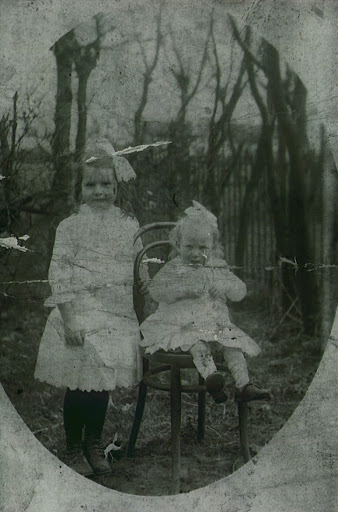
On Monday my maternal grandmother will be 96. She’s the one sitting, her older sister, who turned 101 this year, is standing.

They’re both in remarkable shape. Feisty as hell. They bicker on the phone constantly which is silly, given they’re the last two remaining family members of their generation, but still… old habits die hard and I suspect they’d already started on a lifetime of squabbles by the time this photo was taken in 1918 or thereabouts.

Grandma with my mum as a baby

She and my mum argue from time to time too. In fact all the women in our family are strong-willed – we’re a bit difficult at times – and noisy when we’re all together, each clamouring to be heard above the rest. But I wouldn’t have it any other way… we’re resilient – a necessary attribute for any female and one I’ve always tried to encourage in my own two girls.

My grandma was born into one war and lived through another. She’s of a generation who never knew the frivolity of spending all that was earned – or, worse, spending more than was earned. She’s always understood the difference between luxury and necessity.

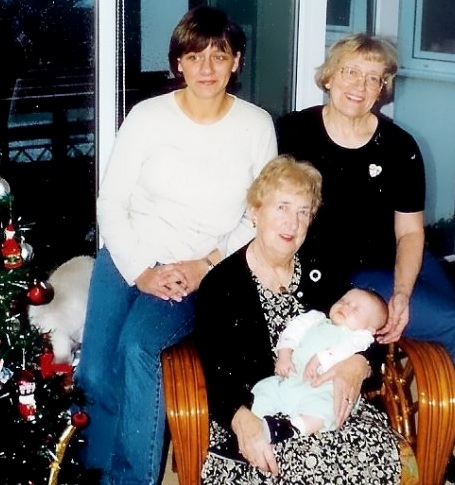
Four generations of strong-willed females!

Sam, Jess and I were talking about her this weekend in advance of her birthday party. We compared childhoods; the things grandma didn’t have when growing up: family car, electric lights, television, computer, iPod, telephone – things my children just cannot imagine being without.

We talked about the things she did have – friends, games played in the street, precious toys that were loved all the more for being so few.

And also about what it must be like to get old – to get really old – and how sad it must be when most of the people you’ve loved are gone, how tired a person must get of the changing world.

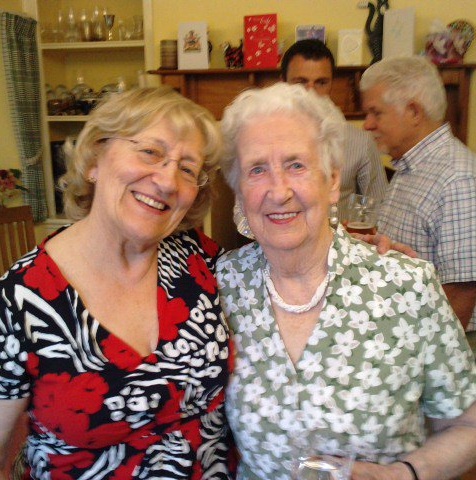
Me and grandma last year

The girls and I reckon, all told, she does pretty well for a woman of her years. She reads every day – crime and thrillers her favourites – and still likes a vodka or two. She shops with my parents each week, makes her own meals, keeps her little flat spotless and is always beautifully turned out – tottering around in heeled shoes when really she ought to be shuffling in flats… but, no! Vanity is the last bastion of independence and she’d sooner stay in the house than wear “ugly” shoes.

In terms of material things, she has all she wants. We can’t give her youth and years and, really, I’m not sure she’d want them back. So I said to the children, what should we give great-grandma for her birthday? 

Jess thought very hard for a moment. A hug?

Yep. That’s it.

Update Monday 23rd: at her party yesterday we asked her what would be the best birthday present she could get. A new pair of legs, she said, because I absolutely refuse to use a stick.


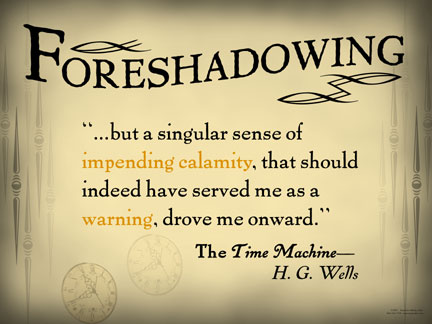
A singular sense of impending calamity…

I love foreshadowing in all its guises. When done subtly it can be masterful. But I have a special fondness for it where it appears in shamelessly unsubtle form – and, in fact, ceases to even be foreshadowing but is, instead, a direct reveal of something that will happen. The Rules Police would frown on such authorly intrusion, I know.
In this extract it’s totally unsubtle. I’m thinking of having a few similar scattered here and there in the early chapters. Elsewhere I’ve gone for the more subtle approach, which I don’t have any doubts about, but I’m curious to know how others see this unsubtle form. 
In this example, where it appears in the novel, only the characters of Aelita and the earl are known to the reader – the others are being mentioned for the first time. This extract morphs into a scene where George tries to dominate a meeting of the town committee – the reader therefore meets him knowing in advance he’s going to kill the barmaid at some later point… but not knowing why. 
Is it too much? Does it irritate or intrigue?? Any comments welcome!
 
In The Anchor, Lizzy uncorks a bottle of red and winks, pointing towards its twin, a third-full and already open on the counter.
“That’s probably off,” she says to Aelita. “I’ll give it Boswell, he won’t mind.”
The indiscriminate drinker, Boswell, is a town character. Nobody knows his real name or, indeed, whether ‘Boswell’ might just be it. He claims to have a home but spends few hours in it – certainly not long enough to bathe, change or pass any time with the wife he also says exists. Each day is, instead, a rhythmic shuffle through town, stopping to chat where conversation can be found, gravitating ultimately to The Happy Haddock where he eats dinner alone. At nine o’clock he’s at The Anchor. Locals keep time by him. Once in the pub, he buys himself one large glass of house wine and chances the rest of the evening’s drinking to luck.     
Aelita knows Lizzy with the usual illusion of familiarity that comes of these things. She couldn’t give a reference beyond cheerful, hard-working and talkative, but doubts Lizzy will ever need one. The barmaid is as much a part of the pub as the flotsam hanging from its walls – the select pieces of broken boat, the stretches of netting, the framed photographs of those who once laboured even longer hours, out there, on the dark unforgiving sea. Everyone and no-one knows Lizzy, just as they know these other familiar objects yet cannot say where they came from or where they’ve been.
When George Delaney furiously beats this popular girl to death, her last thought will be of Bertie Boyde – Lord Belafry, thirteenth earl – her secret lover for some eight years. The final cloudy image in her mind will be his kind face, his smile, his affection, his sweetness. She is very fond of him. 
“George is on top form,” she says now, just a barmaid with no past.
“Who’s he with?”
“The other one.”
The rear snug is used for committee meetings. George’s voice reaches Aelita a fraction before the contents of his pipe – tobacco imported specially, and described by him with its plum and wood-smoked undertones as though it were fine wine. The room is small and not suited to heavy fragrance. This pungent fog, combined as it is with his mistress’s perfume, sets the real agenda. George only ever brings Lucinda when on the attack.
 

Flame, embers and ash

The dying hawthorn branches crackle and spit with the fury of fireworks, their leaping glow an impossible promise of potential – an intensity, a vigour which fades to nothing in moments. John forks the pile, pushing its life to an ever-shrinking centre point. He is pleased to have a physical task with which to occupy himself, gratified by the heat, the wayward sparks pricking his skin, the coiling smoke which stings his throat and waters his eyes. Something needed to trigger a release.  
His wife has told him, only hours earlier and almost in apologetic passing, they are expecting another child – a seventh. There is no room for more, not in the house, not in his heart, and yet what can a man do other than wrap an arm around her briefly, we’ll manage. It is a mistake. An error. A mishap that must now be transformed into a hope. It is the remnants of a similarly conceived fire – a clumsy attempt to create something stronger, something which rises more delicately to intensity, burns off its early passion and settles into a lasting flame. Something which slowly, only slowly, becomes embers – and, still, that solid warmth – before it finally turns to ash.
But such a fire needs a stronger base. A bed of dry kindling, hefty well-seasoned logs and enough air to fan but not disperse its flame. Such a fire needs the sort of forward-looking attention to preparation and selection and execution which only comes from experience. It must be planned well, before it starts. Enthusiasm alone is not enough. Yet it was all they’d had some two decades before. That and a desire to escape the ashes of their own parents’ failings. The urge to fly. He’d always felt it and had thought with her, his wife, it was the same – or at the very least that she would cling on tight as he flexed his wings and took them both elsewhere. That they would soar. Together.
He kicks the final twigs into scattered embers, fragments of passion which now flicker weakly and which will, before he’s even washed the grime from his skin, ebb into the darkness and be gone.